
August 5th, 2026
Chord Specialty Dental Partners Data Breach: What It Means for DSOs
Industry Research — Dental Cybersecurity, News
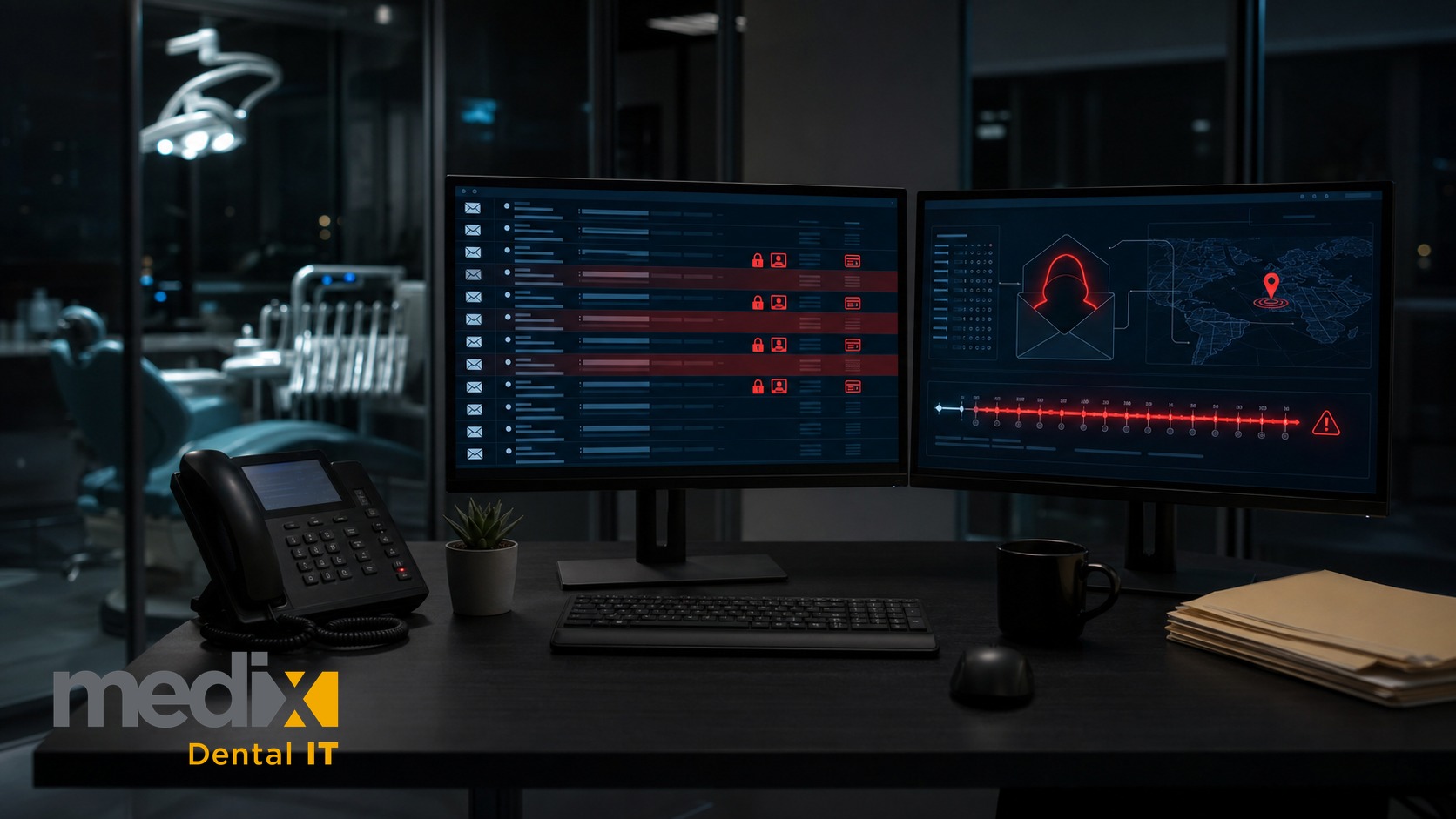
Ask a dentist where the practice keeps its most sensitive patient records and they will point to the practice-management system. Ask where that data actually piles up, and the honest answer is the email inbox.
The Chord Specialty Dental Partners data breach is what happens when nobody questions that answer. Chord is a Tennessee-based dental support organization backing more than 60 affiliated practices across six states. Attackers had access to several employee email accounts for more than five weeks, roughly three of those weeks before anyone noticed anything, and the inboxes they sat in held Social Security numbers, driver’s licenses, bank and payment-card details, and medical information. Up to 173,430 individuals were affected. The breach is a two-part failure every practice can learn from: sensitive data was allowed to accumulate in email, and nobody was watching the accounts closely enough to catch the intrusion for weeks.
What happened in the Chord Specialty Dental Partners breach
Attackers had unauthorized access to multiple Chord employee email accounts from August 19 to September 25, 2024, as SecurityWeek reported. The timeline is the part worth sitting with. Suspicious activity was noticed around September 11, roughly three weeks in, and the intruders still had access for another two weeks after that. Forensic review later established the full window at more than five weeks. The incident was reported to federal regulators on March 14, 2025.
What made it costly was the contents of those mailboxes. The exposed data included names, dates of birth, addresses, Social Security numbers, driver’s license numbers, financial account and payment-card information, health insurance details, and medical information, affecting up to 173,430 people. Chord stated it was not aware of any evidence that the information had been misused, while also noting it could not rule out that the data had been accessed. The breach drew at least seven proposed class actions, which were consolidated in May 2025. No settlement has been reached as of this writing.
Why PHI in your inbox is a breach waiting to happen
Email is where dental data goes to accumulate quietly. An insurance verification here, a scanned ID there, a billing question with an account number attached, a referral with a full history. None of it feels like a filing decision in the moment. But every message stays in the mailbox, and over months and years, a single inbox becomes an unsorted archive of exactly the fields an identity thief wants.
That is why an email-account compromise is so much more damaging than it sounds. These takeovers usually start with an ordinary phishing message, the same everyday attacks we break down in the common IT scams dental practices must avoid. The attacker who takes over a mailbox does not just get to read new messages. They get years of stored correspondence, and in a practice that never cleaned it out, that means Social Security numbers and payment cards sitting in plain reach. The practice-management system might be locked down tight. The inbox next to it, holding copies of the same data, often is not.
The second failure is time. Three weeks before anyone noticed, and two more weeks of access after that, is not a fast smash-and-grab. It is over a month of an intruder reading mailboxes at their leisure, which is only possible when nobody is watching how those accounts are being used. Detection measured in weeks is a monitoring gap, not bad luck. And the two weeks of continued access after the first signal is its own lesson: noticing something is wrong is not the same as knowing what the intruder still has.
What practices and DSOs should do now
This breach points to two fixes: get patient data out of email, and make a break-in visible in hours instead of weeks. You do not need to be technical to push on either one. Four questions to ask your IT provider, and what a good answer sounds like:
- “What patient information is sitting in our email right now, and how far back does it go?” Ask your office manager too. Scanned IDs, insurance cards, billing questions with account numbers, referrals with full histories. A good answer includes a plan to route that traffic through a secure portal or your practice-management system instead, and to delete what has piled up. A mailbox that does not hoard Social Security numbers cannot leak them when it gets hijacked.
- “How does our team sign in to email, and could someone approve a login by accident?” You are listening for a physical security key or an app that makes staff match a number on the screen. Texted codes and tap-to-approve prompts get phished and get approved on reflex, which is how most email takeovers start. Microsoft Research, studying accounts that showed suspicious activity, found that multi-factor authentication cut the risk of account compromise by 98.56% in cases where credentials had already leaked, so this is the highest-return thing on the list even before you upgrade the method. The same research found dedicated authenticator apps outperform SMS codes, which is why the method matters as much as having MFA at all.
- “If someone logged into our email from another country tonight, would we get an alert?” This is the Chord question. A login from a strange location, a trip that is physically impossible, or a new rule quietly forwarding mail out of the practice should all trip an alarm immediately. A good answer names the alerts that are switched on and who reads them. “We would probably see it eventually” is a five-week answer.
- “Has anyone reviewed our email system’s settings, or just set it up and left it?” Rules that auto-forward mail outside the practice, old sign-in methods that skip modern security, and staff mailboxes with far more access than the job needs are the quiet levers that let an intruder linger. A good answer is a recent review with findings. The biggest blind spot in dentistry is not the firewall. It is the email environment nobody has looked at since setup day.
The inbox is the soft target
Hijacked email is one of the most reliable ways dental patient data actually walks out the door, and it keeps working for the same two reasons every time: the data is there, and no one is watching the account. Chord sits alongside several other email-driven incidents on our list of the biggest dental data breaches, and the newer DentaQuest breach is one more reminder that identity, not the firewall, is where these fights are lost. The pattern is so consistent it is almost boring, which is exactly why it keeps succeeding.
For a DSO backing dozens of practices, the inbox problem multiplies. Every affiliated office has staff mailboxes, every mailbox is a potential entry point, and a group without a standardized identity baseline is only as secure as its least-careful employee’s email habits.
That is why we start with the email and identity layer for the groups we protect at Medix Dental IT. We get patient data out of inboxes, put the strongest available login protection on every mailbox, and set up monitoring so a break-in surfaces in hours rather than weeks. None of it is exotic, and none of it requires you to understand the plumbing. It requires someone to have actually looked.
So here is the question worth sitting with. If an attacker logged into one of your practice’s mailboxes tonight, how long would it take you to know? Chord’s answer turned out to be three weeks, and they are not unusual. If your honest answer is anything longer than a day, that is where your next conversation with your IT provider should start.
Posted in Dental Cybersecurity, News