November 16th, 2026
Hood River Dental Data Breach: What It Means for Dental Practices
Industry Research — Dental Cybersecurity, News
A dental practice in Oregon has told patients it was hit twice in under three months, and the second attack is the part worth a dental operator’s time.
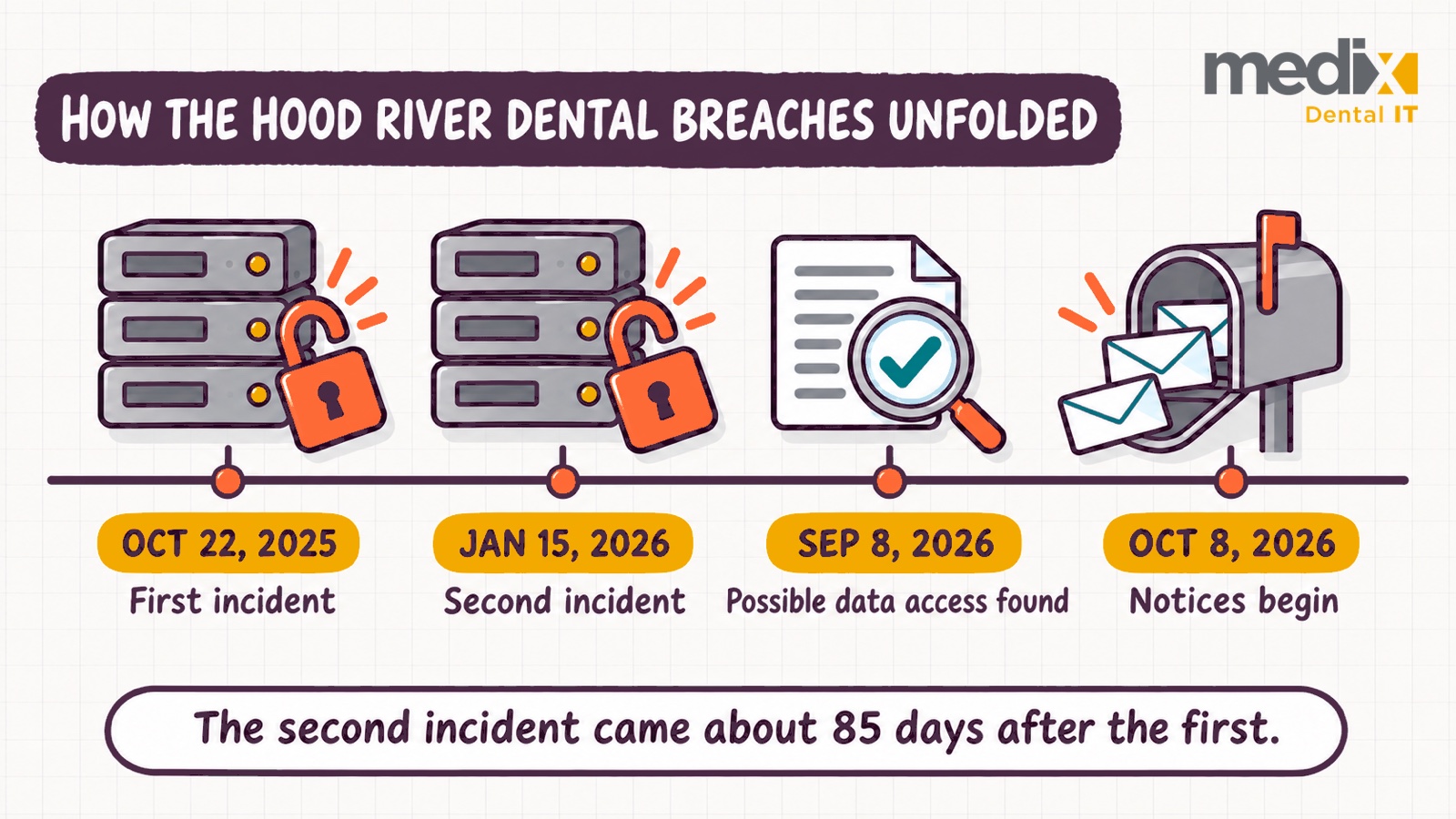
Hood River Dental, a two-office practice in Hood River, Oregon, reported two cybersecurity incidents about 85 days apart and submitted two federal breach reports on October 8, 2026. The Hood River Dental data breach is confirmed by the practice itself: its notice describes both incidents and says files with patient information may have been accessed.
The short answer: Hood River Dental has confirmed two separate incidents. Federal filings list 16,609 people on one report and 14,677 on the other. The notice says the information, which varied by person, may include Social Security numbers, payment card details and treatment records. Its state filings give September 8, 2026, as discovery of possible data exposure and October 8 as the start of notices. Four things to do now: treat a cleaned-up incident as unfinished, document discovery from day one, give the front desk a true script, and warn the team about scam calls.
What is actually known about the Hood River Dental breaches
The practice’s notice describes two incidents. Its Notice of Data Security Incidents, linked from its homepage and marked “Updated: October 8, 2026”, says:
“On or about October 22, 2025, we experienced a cybersecurity incident that affected certain systems within our network environment. […] Subsequently, on or about January 15, 2026, we experienced another cybersecurity incident.”
The investigation “concluded on September 8, 2026,” the notice says, and found that files containing personal or protected health information “may have been accessed by an unauthorized party.”
Two federal reports, filed the same day. The HHS Office for Civil Rights breach portal lists two Hood River Dental reports, both submitted October 8, 2026, both listed as a hacking incident: one for 16,609 people and one for 14,677.
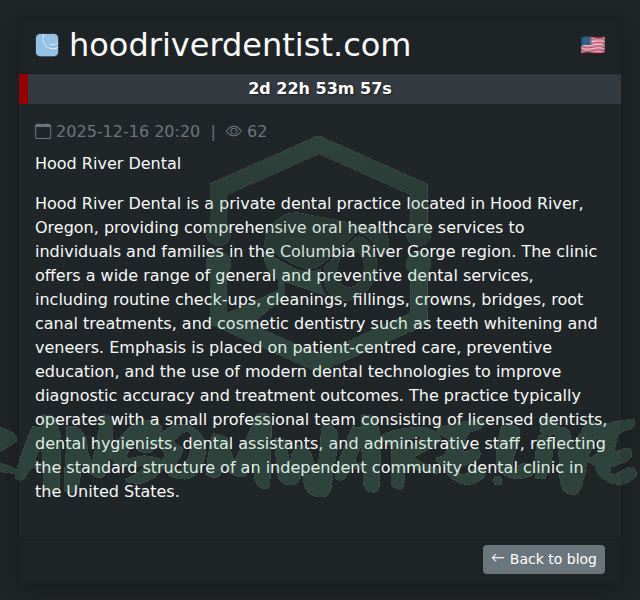
Two ransomware groups listed the practice. Ransomware.live recorded a Safepay listing for the practice’s website on December 16, 2025. Another tracker, RansomLook, recorded a Bravox listing on January 23, 2026, and Ransomware.live’s record of it lists a claimed 187.2GB of data. The notice names no group, and the sources we reviewed do not tie either listing to a specific incident.
What we have not found: how the attackers got in, whether the incidents are connected, and a count of unique patients.
Three claims being repeated, checked
As of November 16, 2026, AI answers and coverage repeat these three claims.
“16,609 in the first incident and 14,677 in the second.” ChatGPT, Gemini and Perplexity all pair the counts that way. Oregon’s breach list associates 16,609 with the January 15, 2026, incident. No source we reviewed says which incident the 14,677 report covers.
“Patient data had been exposed.” That is HIPAA Journal’s wording, repeated by several AI answers. The notice says files “may have been accessed,” and the practice’s New Hampshire filing says health information “may have been subject to unauthorized access and acquisition.”
Google’s AI Overview list of exposed data. It names addresses, phone numbers, provider names and insurance plan names. Google cites the New Hampshire filing, which covers one resident. The practice’s notice lists more, including Social Security numbers and card details.
What the notice says was involved
| What the notice lists | What to check in your own office |
|---|---|
| “payment card information” and “financial account information” | Review where your office keeps card-on-file numbers and payment plan paperwork, and who can open those files |
| “driver’s license number” | Review whether your office needs to keep ID scans, and who can access them |
| “medical diagnosis and treatment information, and health insurance information” | Details that support insurance fraud and convincing scam calls. The notice tells patients to review their explanation of benefits forms |
Hit twice: why the second incident is the lesson
The notice says that after the first incident the practice took steps to check and secure its systems, and the second incident followed.
Recovery has two jobs. One is getting systems running again. The other is checking for remaining attacker access.
The 60-day clock starts at discovery, and the rule defines discovery. For a breach of unsecured protected health information, a practice must notify affected patients without unreasonable delay and no later than 60 calendar days after discovery. The same rule treats a breach as discovered on the first day it is known to the practice, or would have been known with reasonable diligence. An investigation’s end date does not automatically set discovery.
Hood River Dental’s filings separate two dates. In New Hampshire, it says it “detected a network security incident” on or about October 22, 2025, and “discovered” on or about September 8, 2026, that health information may have been accessed. The Oregon Department of Justice breach list records September 8 as discovery, with notices sent 30 days later. The public record does not show whether HIPAA required an earlier discovery date. The Access Dental data breach filings split the same way: the company dates awareness to about May 5, 2026, while its Texas filing lists October 21 as the discovery date.
What should a dental practice do now?
1. Treat a cleaned-up incident as unfinished
Check for remaining attacker access before calling recovery complete. Have your incident response team coordinate credential resets, including service and vendor accounts, look for remote access tools nobody remembers installing, and require multi-factor authentication on email and every remote connection. Hood River Dental’s patient letter says it has “reset passwords and enabled multi-factor authentication for all users.”
2. Document discovery from day one
Outside a few exceptions, unauthorized access to protected health information is presumed to be a breach unless a risk assessment shows a low probability it was compromised. Record what was known and when, name who leads that assessment, and track the breach notification deadlines from the start.
3. Give the front desk a script that is true
If patients ask about the news: “For questions about Hood River Dental’s notice, call its help line at 1-888-940-8885.” Skip “our systems were not affected” unless someone has checked.
4. Warn the team about scam calls
Card numbers, insurance details and treatment history make a caller sound legitimate. Brief staff on fake billing and insurance calls, and point patients to the number on their own card or statement.
For multi-location groups: check every office after an incident
The Monday you notice it is not the day the attack started. In acquired offices, a previous IT provider’s remote tools and logins can stay in place after the deal unless someone removes them. After an incident at one office, check what it shares with the others, give one person the breach clock, and use the case in security awareness training.
Hood River Dental Data Breach FAQs
Was Hood River Dental hacked?
Yes. The practice’s notice describes two cybersecurity incidents, on or about October 22, 2025, and January 15, 2026, and says an investigation that concluded September 8, 2026, found files with patient information may have been accessed. It filed two reports with the HHS Office for Civil Rights on October 8, 2026.
What information was involved?
Name plus one or more of: date of birth, financial account information, payment card information, driver’s license number, Social Security number, medical record number, medical and/or patient ID account number, diagnosis and treatment information, and health insurance information.
How many patients were affected?
The HHS Office for Civil Rights portal lists two reports, one for 16,609 people and one for 14,677, which add up to 31,286. The practice has not said whether some patients appear on both, so the number of unique people could be lower. The Oregon Department of Justice list shows 16,609 for the January 15, 2026, incident.
Which ransomware group was behind it?
The practice has not named one. Ransomware.live recorded a Safepay listing for the practice’s website on December 16, 2025, and has tracked Safepay since November 2024. The tracker RansomLook recorded a Bravox listing on January 23, 2026, and Ransomware.live’s record of it lists a claimed 187.2GB. A listing is the attacker’s claim.
Is there a Hood River Dental class action?
Attorneys working with ClassAction.org posted an investigation page on October 9, 2026, asking affected people to get in touch. The page we reviewed does not identify a filed complaint.
When were Hood River Dental patients notified?
The practice says it detected the first incident on or about October 22, 2025, and discovered on or about September 8, 2026, that health information may have been accessed. Notices began going out around October 8, and the practice says they were not delayed by law enforcement.
The question to ask your office manager
If an incident were cleaned up tomorrow, who in your office would check for remaining attacker access? If the answer depends on who you ask, start there. If you want a second set of eyes on it, the team at Medix Dental IT is happy to compare notes.
Posted in Dental Cybersecurity, News